English
 العربية
 Español
 Pусский
Recent Posts
About us
-
We believe that: Good quality, competitive price and perfect after-sale service will make our products sell well in the world!We look forward to working with you in the near future!
Formulating a Hotel Laundry Detergent: Key Considerations to Address

Developing a hotel laundry detergent formula revolves around four core objectives: cleaning efficiency, linen protection, cost control, and safety compliance. It also requires comprehensive consideration of hotel linen characteristics (e.g., material, stain types), washing scenarios (industrial washing machines, water temperature/water level), and operational needs. Below is a detailed breakdown of the key factors:
I. Core Functionality: Meeting the Cleaning Needs of Hotel Linens
Hotel linens (bed sheets, duvet covers, towels, tablecloths, etc.) are prone to high-frequency, diverse, and stubborn stains (e.g., sweat stains, sebum, food oil stains, cosmetic residues, blood stains). The formula must prioritize cleaning power while avoiding "over-cleaning" that damages linens.
- Selection of Surfactants (Core Cleaning Components)
A combination of surfactants is needed to balance "oil removal, protein stain removal, and adaptability to low/high temperatures":
- Anionic surfactants: Such as sodium dodecyl benzene sulfonate (LAS) and sodium laureth sulfate (AES), which excel at removing oil and sebum—ideal for heavily soiled linens like tablecloths and restaurant linens.
- Non-ionic surfactants: Such as alcohol ethoxylate (AEO-9) and alkyl polyglucoside (APG), which dissolve well at low temperatures, resist hard water, and are gentle on fibers. They are suitable for removing sweat/protein stains from cotton-linen linens.
- Auxiliary surfactants: Such as cocamidopropyl betaine (CAB), which enhances foam stability (meeting the low-foam requirement of industrial washing machines to prevent overflow) while reducing irritation.
- Targeted Stain-Removal Components
Supplement functional ingredients based on common hotel stains:
- For protein stains (sweat, blood): Add proteases (e.g., subtilisin), ensuring compatibility with temperature (active between 40–60°C; avoid high temperatures that inactivate the enzyme).
- For oil/grease stains: Add lipases and emulsifiers (e.g., glyceryl monostearate) to break down stubborn oils.
- For pigment/yellow stains: Add sodium citrate or EDTA (to chelate calcium/magnesium ions in hard water and prevent scale deposits that cause yellowing) or low-concentration optical brighteners (compliant with national standards to avoid linen yellowing).
- Bleaching Systems (Added as Needed to Avoid Fading)
White linens require brightness maintenance, while colored linens need protection against bleaching-induced fading. Thus, formulas should be differentiated:
- White linens: Sodium percarbonate (low-temperature bleaching) or sodium hypochlorite (high-temperature bleaching) can be added, with concentration controlled to prevent cotton fiber embrittlement.
- Colored linens: Chlorine-based bleaches are prohibited. Instead, use oxygen-based bleaches (e.g., peracetic acid) or chlorine-free bleaches, and add color fastness protectants (e.g., polyethylene glycol).
II. Linen Protection: Extending Service Life (Critical for Hotel Costs)
Hotel linens undergo repeated washing (typically 30–50 cycles). The formula must prevent fiber damage, fading, and hardening, focusing on two key aspects:
- pH Value Control (Adapted to Linen Material)
Different materials have varying acid/alkali resistance. Excessively high pH causes fiber hydrolysis and embrittlement, while excessively low pH reduces cleaning power:
- Cotton-linen linens: Strong alkali resistance; pH can be controlled at 9–10 (weakly alkaline).
- Chemical fiber/blended linens (e.g., polyester, nylon): Poor alkali resistance; pH should be 7–8 (slightly alkaline). Avoid strong alkalis (e.g., sodium hydroxide) and use weak alkalis (e.g., sodium carbonate, sodium bicarbonate).
- Wool/silk linens (high-end hotel linens): Require neutral formulas (pH 7–7.5). Strong alkalis and proteases (which break down wool protein) are prohibited.
- Anti-Redeposition and Softness
- Anti-redeposition agents: Add sodium carboxymethyl cellulose (CMC) or sodium polyacrylate to prevent dirt from reattaching to linens during washing (avoiding towels getting dirtier over time or gray spots on bed sheets).
- Softeners: Towels need to maintain absorbency and softness. Cationic softeners (e.g., dioctadecyl dimethyl ammonium chloride) can be added, but compatibility with surfactants must be ensured (to avoid neutralization and ineffectiveness), and dosage should not be excessive (to prevent reduced absorbency).
III. Scenario Adaptation: Matching Hotel Industrial Washing Conditions
Hotels mostly use industrial drum washing machines, which operate with "high water levels, fast rotation speeds, and large water temperature fluctuations (30–80°C)". The formula must adapt to industrial operations:
- Solubility and Stability
- Avoid caking-prone ingredients (e.g., ungranulated LAS). Sodium sulfate (Glauber’s salt) can be added as a filler to improve powder flowability and solubility, preventing clogs in washing machine pipes.
- Low-temperature stability: Hotels in northern regions have low water temperatures (30–40°C) in winter. Ensure surfactants (e.g., AEO-9) do not precipitate at low temperatures; ethylene glycol can be added as a co-solvent.
- High-temperature stability: During summer or high-temperature washing (60–80°C), avoid inactivation of proteases and lipases. Choose high-temperature-resistant enzymes (e.g., high-temperature proteases, active at 50–85°C).
- Low Foam Requirement (Core for Industrial Washing Machines)
Industrial washing machines have high rotation speeds and water levels; excessive foam causes:
- Overflow and equipment damage;
- Impeded circulation of washing liquid, reducing cleaning efficiency.
Thus, defoamers (e.g., polyether-modified silicone oil, organic silicone defoamers) must be added to control foam height below 10 cm (meeting industrial washing standards).
IV. Cost and Economy: Core for Hotel Operations
Hotels handle large laundry volumes (hundreds of kilograms of linens daily). The formula must balance "cleaning performance" and "cost" to avoid overusing high-priced ingredients:
- Cost-Effectiveness of Raw Materials
- Prioritize bulk chemical raw materials (e.g., LAS, AEO-9), which are cheaper than high-end imported surfactants.
- Use low-cost fillers (sodium sulfate, sodium chloride) to adjust concentration and reduce unit weight costs (ensuring active ingredient content ≥15% to avoid insufficient cleaning power).
- Reduce the dosage of high-priced functional ingredients (e.g., imported enzymes). Improve synergy through compounding (e.g., "protease + sodium citrate") to replace single high-priced ingredients.
- Concentrated Formula Design
Develop concentrated laundry detergents (active ingredient content: 30–50%). Compared to regular detergents (10–15% active ingredients):
- Reduces transportation and storage costs (concentrated detergents require only 1/2–1/3 the dosage of regular detergents for the same cleaning effect).
- Lowers the hotel’s per-wash cost (concentrated detergents can reduce costs by 10–20% per kilogram of linens).
V. Safety and Compliance: Avoiding Risks and Regulatory Violations
Hotel laundry detergents must meet both "personnel safety (operators, guests)" and "environmental compliance (discharge, national standards)". Key considerations include:
- Safety Control
- Low irritancy: Avoid highly irritating ingredients (e.g., high-concentration sodium hydroxide, formaldehyde releasers), which can cause skin allergies in operators with long-term exposure. Cocamide DEA can be added as a mildener.
- Non-toxicity: Prohibit optical brightener VBL (some low-quality brighteners pose carcinogenic risks). Choose brighteners compliant with GB 15193.3-2014 Toxicological Evaluation Procedures and Methods for Food Safety.
- Equipment safety: Add corrosion inhibitors (e.g., sodium tripolyphosphate—though gradually replaced by phosphorus-free alternatives, low concentrations protect the metal inner lining of washing machines).
- Environmental Compliance
- Phosphorus-free: Comply with national "phosphorus ban" requirements (GB/T 13171-2021 Laundry Detergents, phosphorus content ≤0.5%). Replace sodium tripolyphosphate with phosphorus-free chelating agents (e.g., sodium citrate, EDTA-2Na).
- Biodegradability: Surfactants must be biodegradable (e.g., APG, AEO-9 with biodegradation rate ≥90%) to avoid water pollution after discharge.
- VOC control: Avoid volatile organic solvents (e.g., ethanol, methanol) to meet atmospheric environmental standards (especially for hotels in key environmental protection areas).
VI. Additional Details: Adapting to Special Hotel Needs
- Odor Control
Hotel linens require a fresh scent to enhance guest experience. Low-concentration fragrances (e.g., lemon, lavender) can be added, but note:
- Fragrance stability (no volatilization or odor change at high washing temperatures).
- Non-sensitization (choose fragrances compliant with IFRA standards).
- Compatibility
Hotels may use fabric softeners or disinfectants (e.g., sodium hypochlorite, quaternary ammonium salts) simultaneously. The formula must avoid chemical reactions with these additives:
- If cationic softeners are used, control the dosage of anionic surfactants in the detergent (to avoid neutralization and ineffectiveness).
- If chlorine-based disinfectants are used, avoid reducing agents (e.g., sodium sulfite) in the detergent (to prevent disinfection failure).
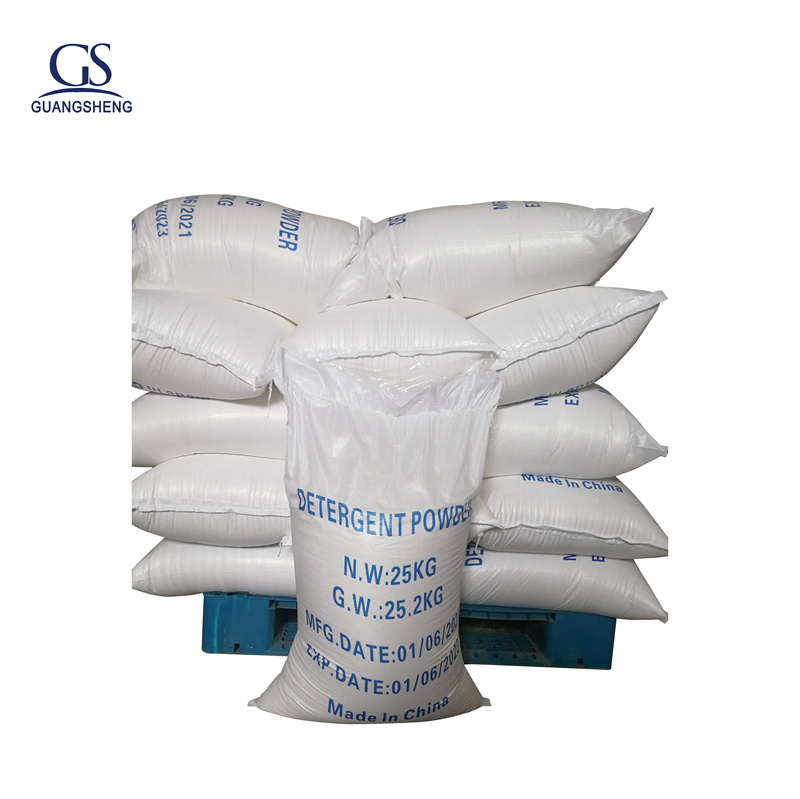
Choosing Hebei Guangsheng Technology Co.,ltd's laundry detergent means choosing a new, efficient and long lasting fragrance laundry method. We have different formulas laundry detergent for choose. We are committed to providing consumers with high-quality laundry products, solving laundry problems with innovative technology, and enhancing the quality of life with excellent service. Welcome to make a purchase and start an easy laundry journey!